How it works
Practice the oral board out loud. Get scored like a real panel.
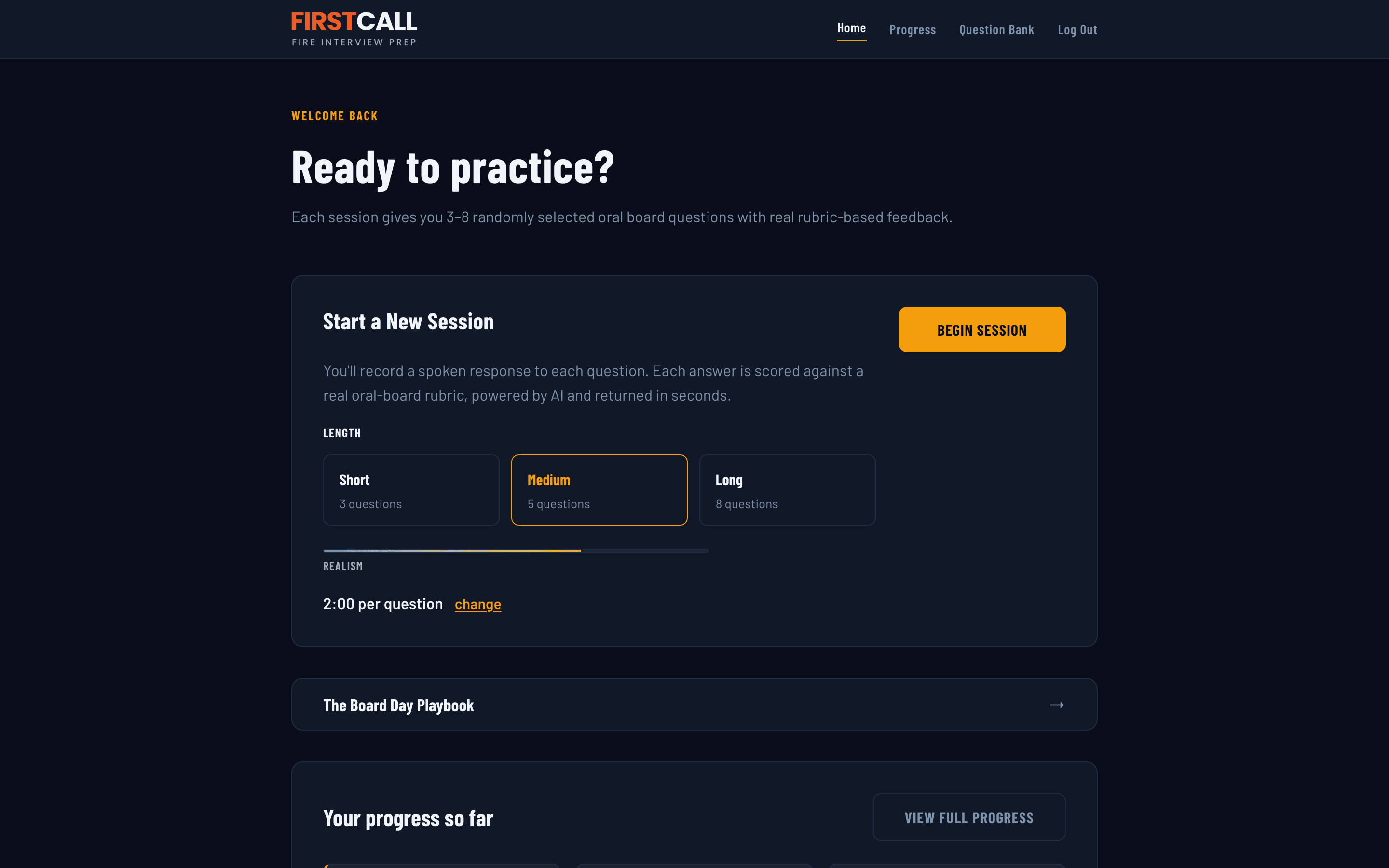
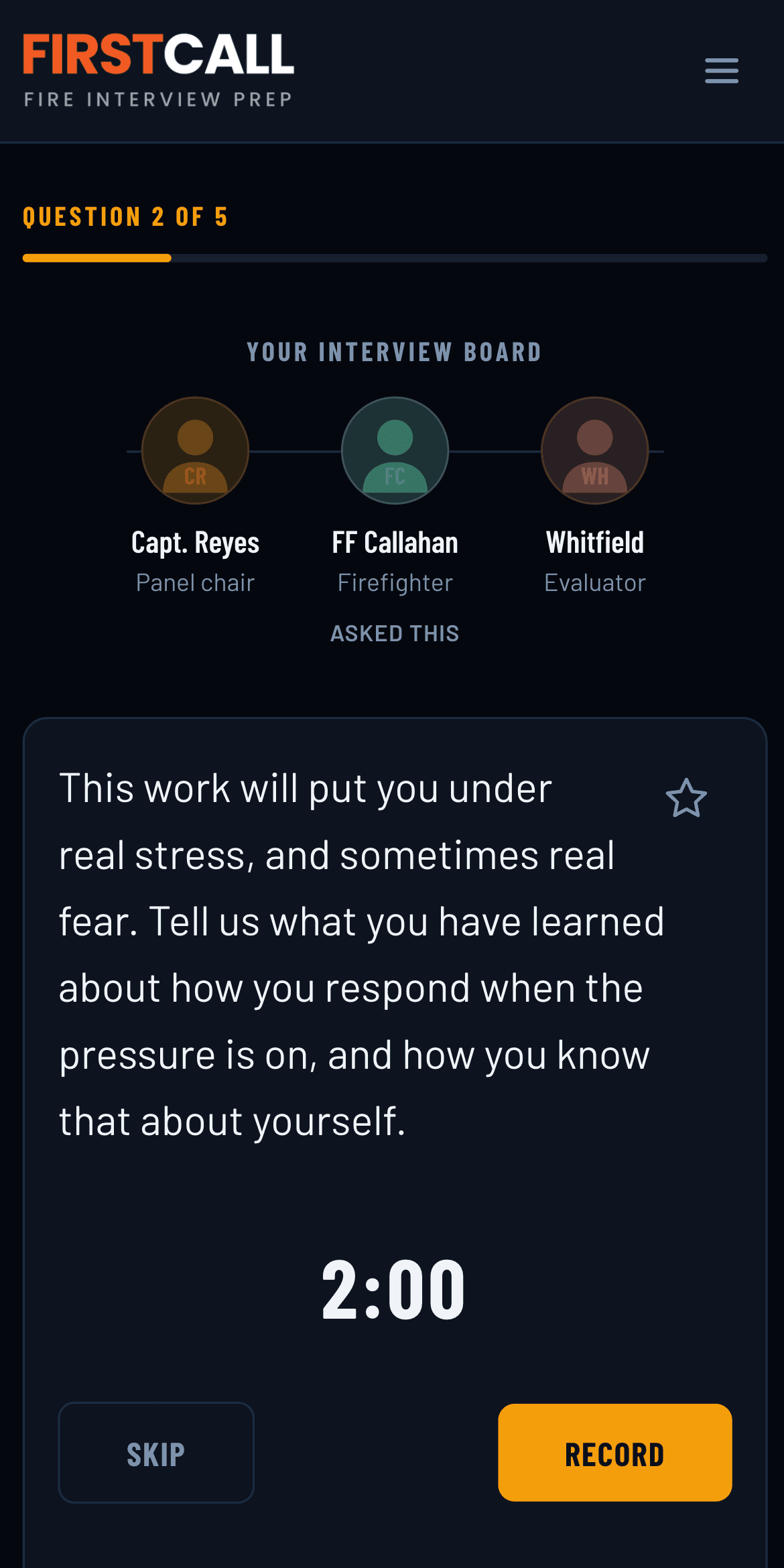
First Call asks you real oral board questions, you answer out loud, and every answer is scored against a rubric built for that question. Here's what a session looks like, start to finish.
The loop
One question, start to finish.
Step 01: The board asks
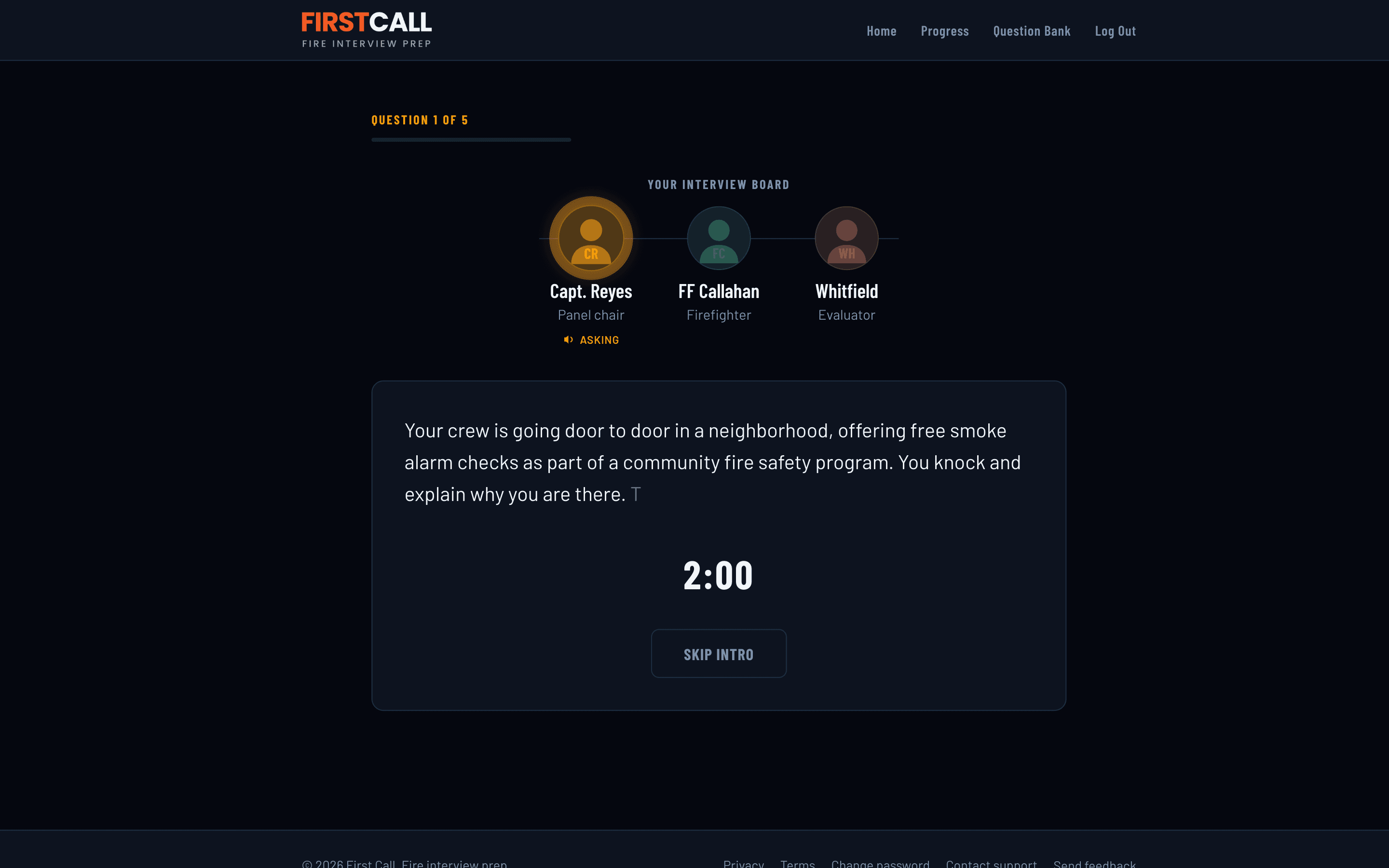
You get a real oral board question. Turn on the read-aloud board and it's asked out loud, the way a panel would ask it.
Step 02: You answer out loud
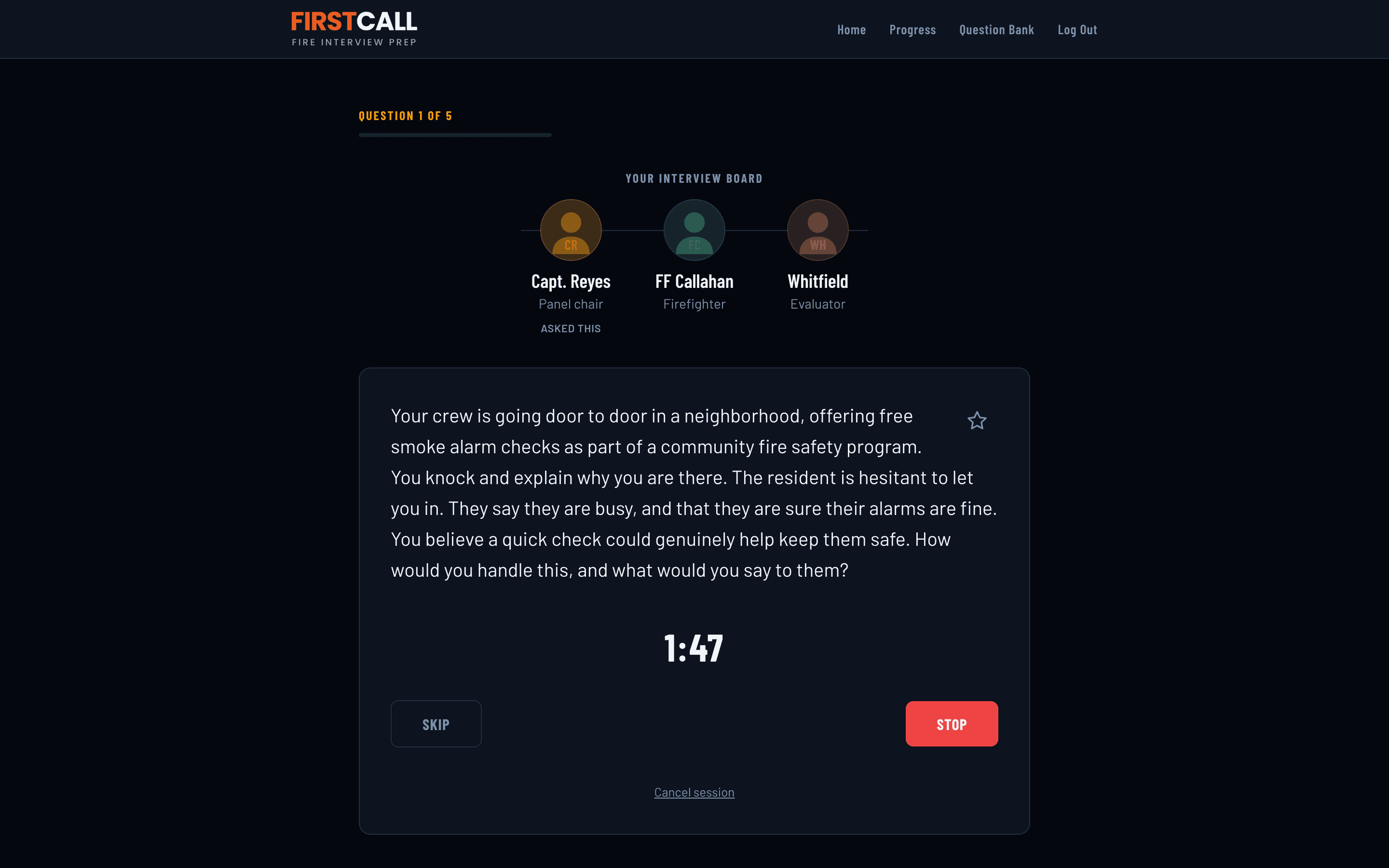
On a timer, no script, no notes on screen. You talk it through the way you'll have to in the room.
Step 03: It gets scored
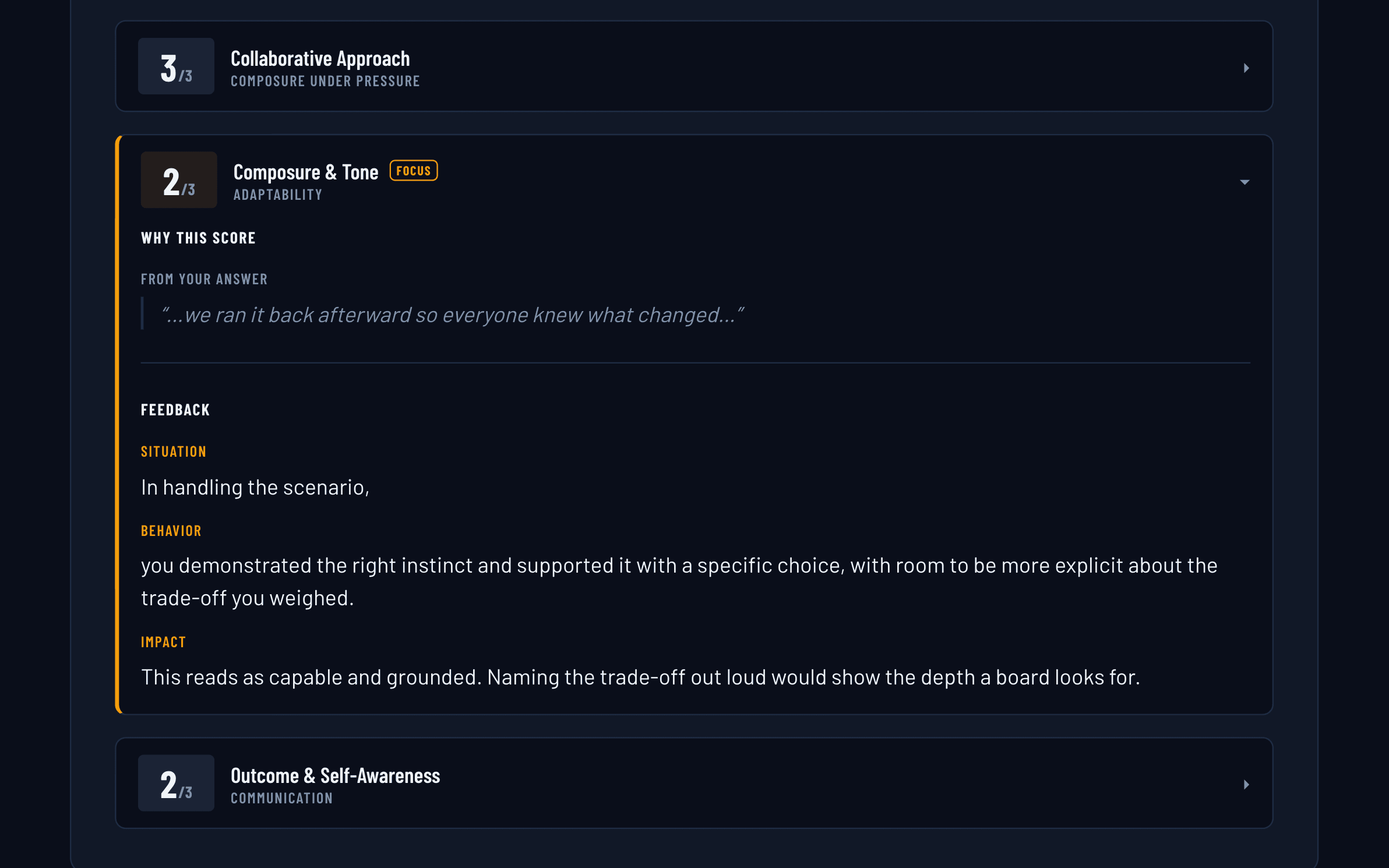
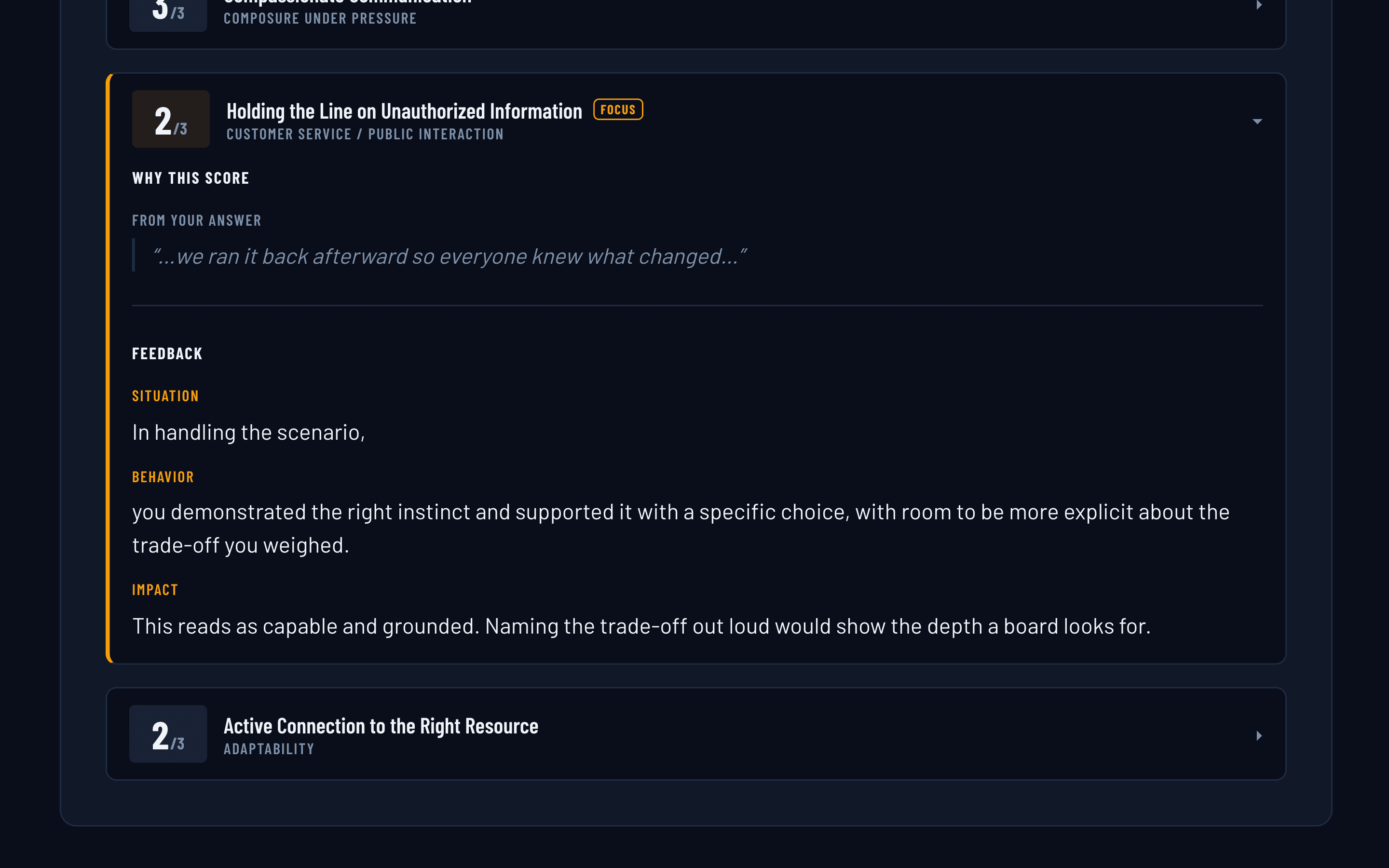
Your answer is scored criterion by criterion against a rubric written for that exact question.
Step 04: You see what to fix
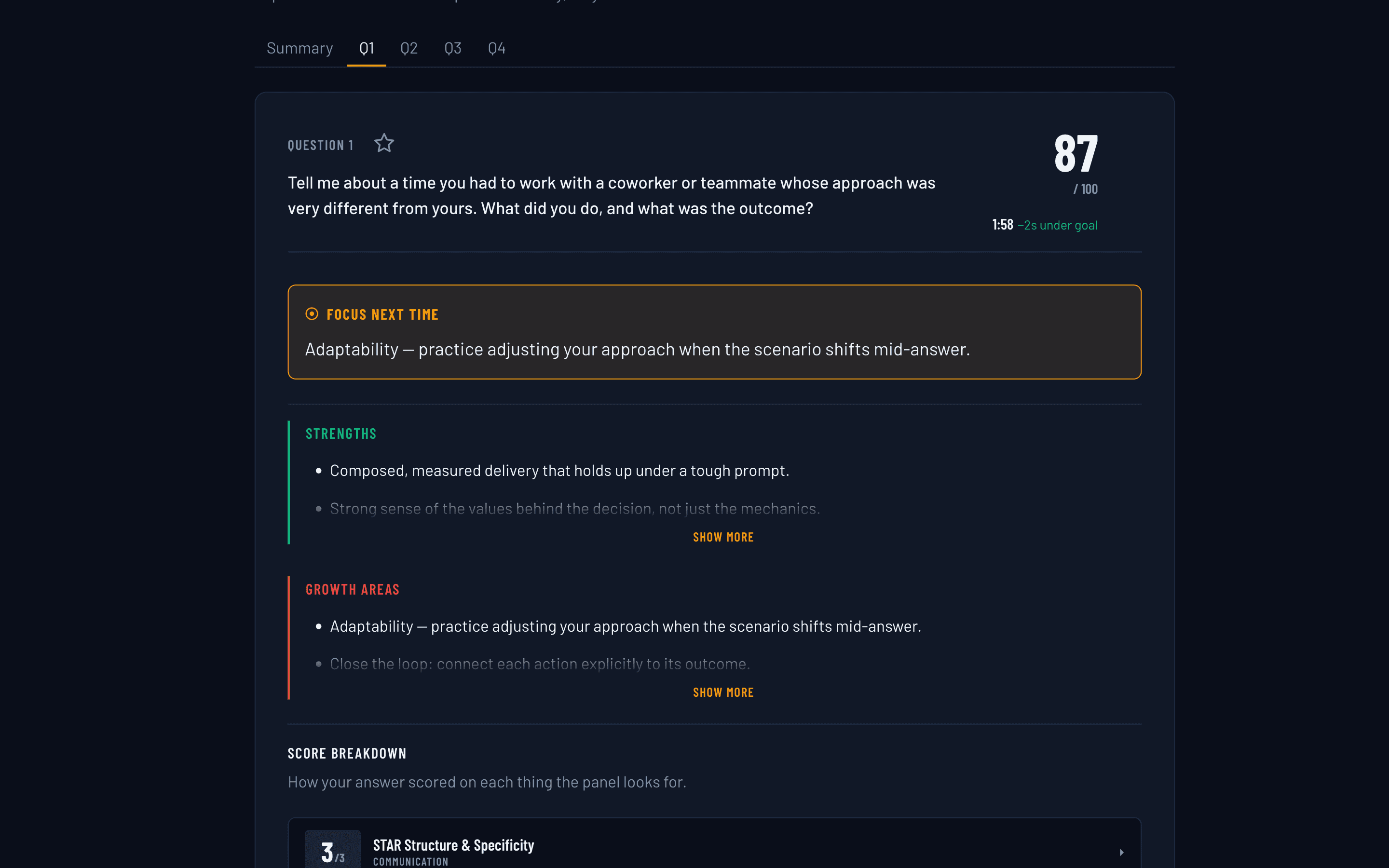
What landed, what didn't, and the one or two things to focus on before your next rep.


The scoring
What makes the scoring different.
Most practice tools hand you a number. First Call shows you the bar and where you landed against it.
- 1
A rubric for every question
Each question has its own criteria and defined score levels. A teamwork question is graded on teamwork, not on a generic checklist.
- 2
Feedback that quotes you
The feedback points to what you actually said, so you can see exactly which part of your answer earned the score and which part cost you.
- 3
Substance, not accent
Scoring works from a transcript of your answer. It grades what you said, not your accent or your speaking style.
- 4
Strict on purpose
A practice tool that grades easier than the real board gives you false confidence. First Call would rather tell you now.
The practice
Built to feel like the room.
The closer practice is to the real thing, the less the real thing surprises you.

3, 5, or 8 questions
Pick a short, medium, or long session depending on how much time you have.
A timer on every question
Each answer runs on the clock, so you learn what a complete answer feels like inside the time you get.
First Call Live
An optional read-aloud board that asks each question out loud, so you practice listening and answering, not reading.
Hide the question
Turn off the question text and answer from what you heard, the way it works in the room.
Your progress
See where you stand, session after session.

Every answer feeds eight core competencies. Over time you see your session scores, your strongest area, and the one that keeps costing you points.
The eight: Communication, Decision-making, Composure, Teamwork, Integrity, Adaptability, Public service, Job knowledge.
Drill the weak spot
Found the competency that keeps dragging you down? Pull questions for it from the Question Bank and work it on purpose.
Who it's for
Anyone with a fire oral board coming up.
Entry-level or lateral, any department. You don't need fire experience to use it. The questions cover what oral boards consistently evaluate, so the practice carries over wherever you're testing.
Free while in beta. No credit card.
New to the board? Read how to prepare for a firefighter oral board, or check the FAQ.